The Flooring Industry Has An Image Problem
For flooring manufacturers and online retailers, high-quality product imagery is no longer optional. Customers expect to see clear, realistic, consistent images before they order a sample, visit a showroom, or make a purchase. But creating accurate flooring marketing content at scale is a real problem.

Rich Benson
Published May 30, 2026 · 8 min read
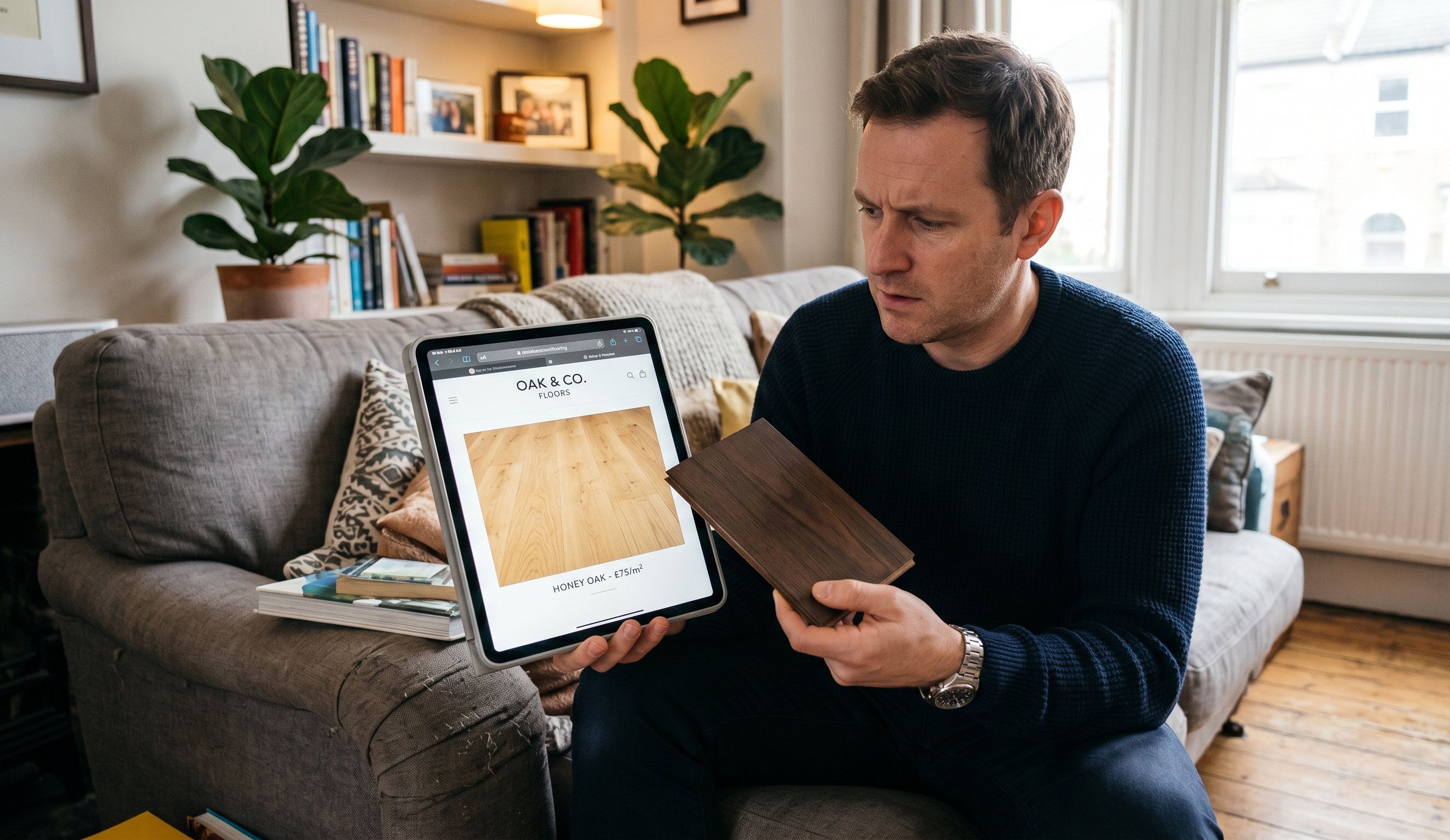
Many flooring brands have hundreds or thousands of products across wood, LVT, laminate, vinyl, carpet, tiles and engineered flooring ranges. Each product needs imagery that shows the correct colour, texture, scale, laying pattern and overall finish. That content then needs to work across websites, visualisers, brochures, sample pages, social media, ecommerce listings and retailer platforms.
The result is often a messy mix of product swatches, poor CGI room scenes, customer installation photos, inconsistent lighting, and images that do not accurately represent the floor.
And when the image is wrong, the customer’s expectations are wrong.
The Problem: Flooring Images Are Often Not Accurate Enough
A common issue across flooring websites is that the imagery does not reflect the real product closely enough. This creates problems across the full buying journey.
Customers become uncertain. Retailers receive more questions. Samples are ordered for the wrong reasons. Complaints increase when the delivered product does not match the expectation created online. Sales teams lose confidence in the content they are using.
The simple truth is that flooring product imagery needs to be more than attractive. It needs to be accurate.
Why This Is a Big Problem for Online Flooring Retailers
Independent online flooring retailers often face this problem from two different directions.
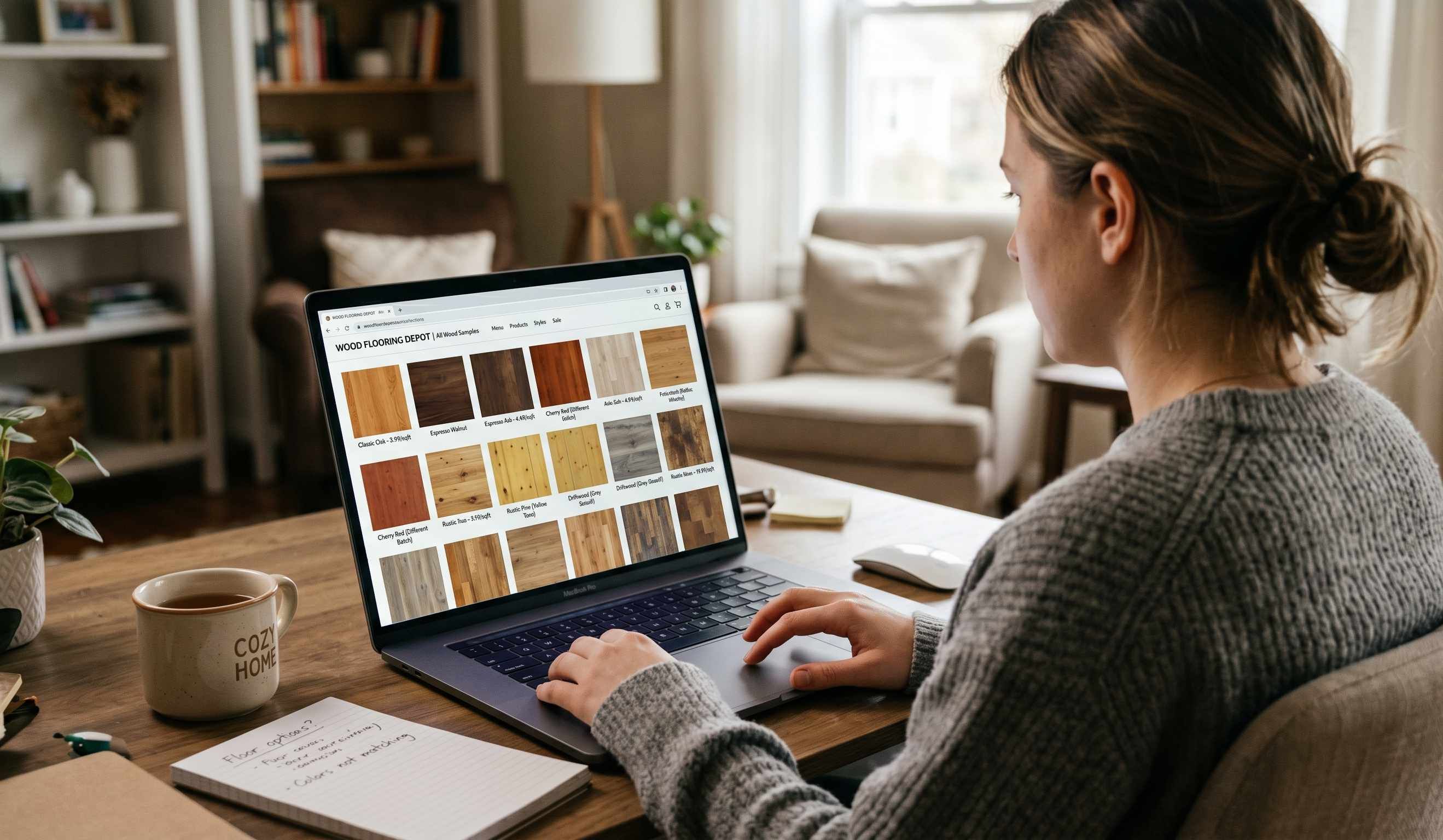
The first issue is manufacturer-supplied imagery. Many retailers are given poor-quality CGI images, inconsistent product renders or basic room scenes that are not good enough for modern ecommerce. The retailer has limited control over these assets, but they still have to use them to sell the product.
That puts the retailer in a difficult position. They may have a good product at a competitive price, but the visual content does not help them sell it.
The second issue appears when retailers source their own products. These ranges often do not come with a full set of marketing images, room scenes or visualiser-ready textures. Suddenly, the retailer has to create the content themselves.
For many retailers, this is a completely new area. They may not know how to photograph flooring correctly, how to create repeatable textures, how to show scale, or how to make room scenes that look professional and consistent across an entire product range.
As a fallback, many use customer installation photos. These can be useful for social proof, but they are rarely suitable as primary product imagery. Lighting conditions vary. Camera quality varies. The floor may be partly covered by furniture. The colour is often inaccurate. The image may show a real installation, but it does not provide a controlled, reliable representation of the product.
Some retailers are now turning to AI-generated flooring images to solve the problem. This can produce attractive lifestyle images quickly, but there is a major risk: the flooring itself is often wrong. The laying pattern may change. A straight plank product may appear as herringbone. The plank width may be incorrect. The colour may shift. The scale may look unrealistic. The AI may create a beautiful image, but it is no longer a true representation of the product being sold.
For flooring ecommerce, that is not good enough.
Why This Is a Big Problem for Flooring Manufacturers
For flooring manufacturers, the issue is usually scale.
A manufacturer may have thousands of SKUs across multiple collections. Each one needs a product image, room scene, texture sample and supporting marketing content. Creating this manually through photography is expensive, time-consuming and hard to organise.
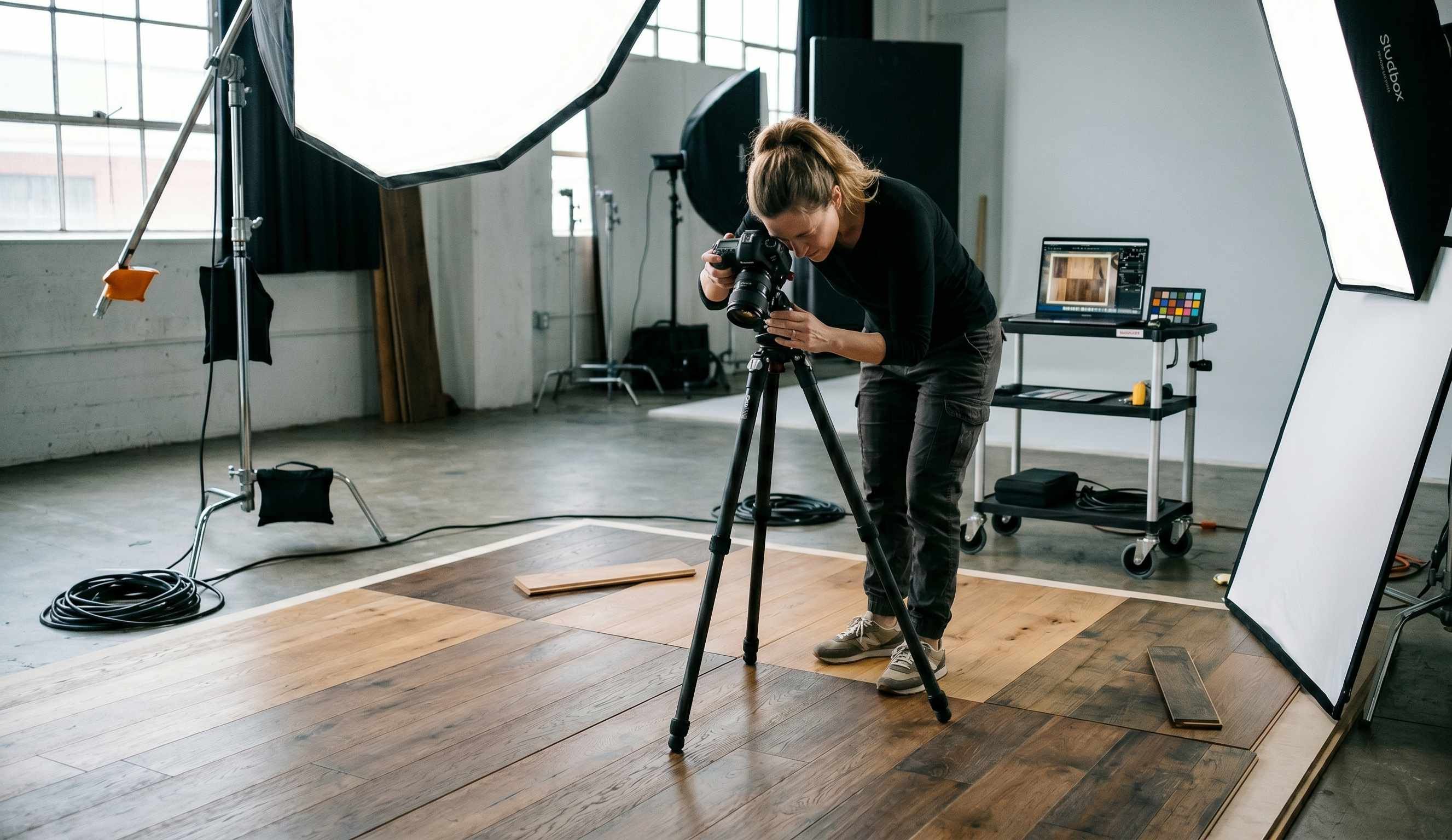
Physical photoshoots require product samples, locations, stylists, installers, lighting, photographers and post-production. Doing this for every colourway, size, pattern and collection quickly becomes unrealistic.
To meet the volume demand, many manufacturers turn to cheap CGI. This solves the quantity problem but often creates a quality problem. The room scenes may look artificial. The flooring may not reflect the true texture or finish. Products across the same range may look inconsistent. Retailers then receive imagery that does not meet their standards, which creates friction further down the sales chain.
Manufacturers need a way to create flooring marketing images at scale without sacrificing accuracy.
Accuracy Should Start with the Texture
The most important part of any flooring image is the floor itself. If the texture is wrong, everything built from it will be wrong. A visualiser, a room scene, a product image or an AI-generated lifestyle image can only be as accurate as the source material it uses.
This is where accurate texture scanning becomes critical. A properly scanned flooring texture becomes a reliable source of truth. It captures the colour, grain, pattern, surface character and material detail of the real product. That same texture can then be used across a visualiser, ecommerce product pages, room scenes, brochures and marketing campaigns.
Instead of rebuilding content from scratch each time, the brand has one accurate digital version of the product that can be reused consistently.
Read more about this here
Check out this article on texture creation.
How roomWIZ Solves the Problem
roomWIZ has been built to help flooring brands, manufacturers and online retailers create accurate visual content at scale. Our tool set combines three key services: texture scanning, the roomWIZ floor visualiser, and Content Studio.
1. Texture Scanning
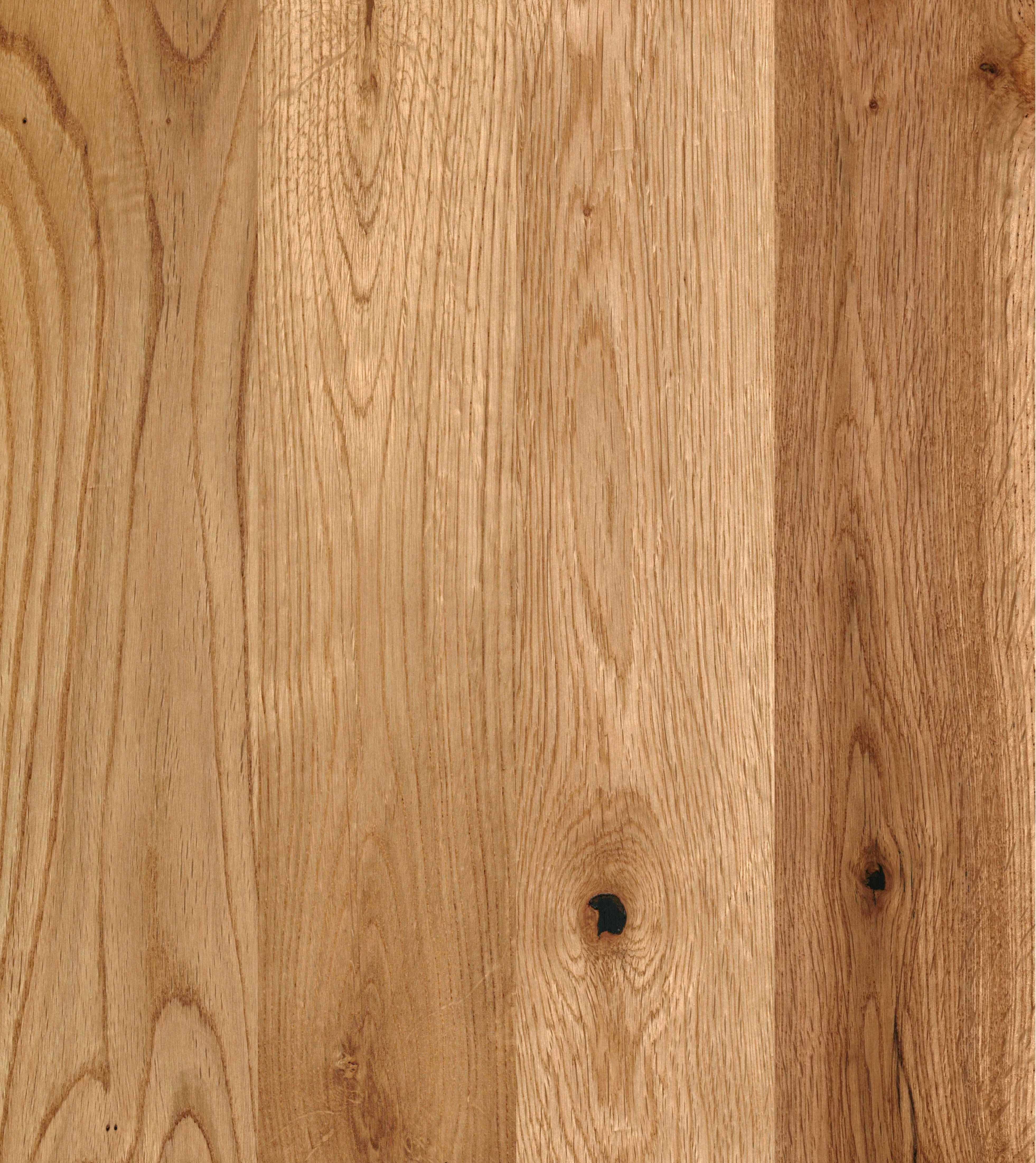
We can scan physical flooring samples accurately to create high-quality digital textures. These textures become the source of truth for each product.
This means flooring products can be represented consistently across all digital channels, with accurate colour, pattern and material detail.
2. Floor Visualiser
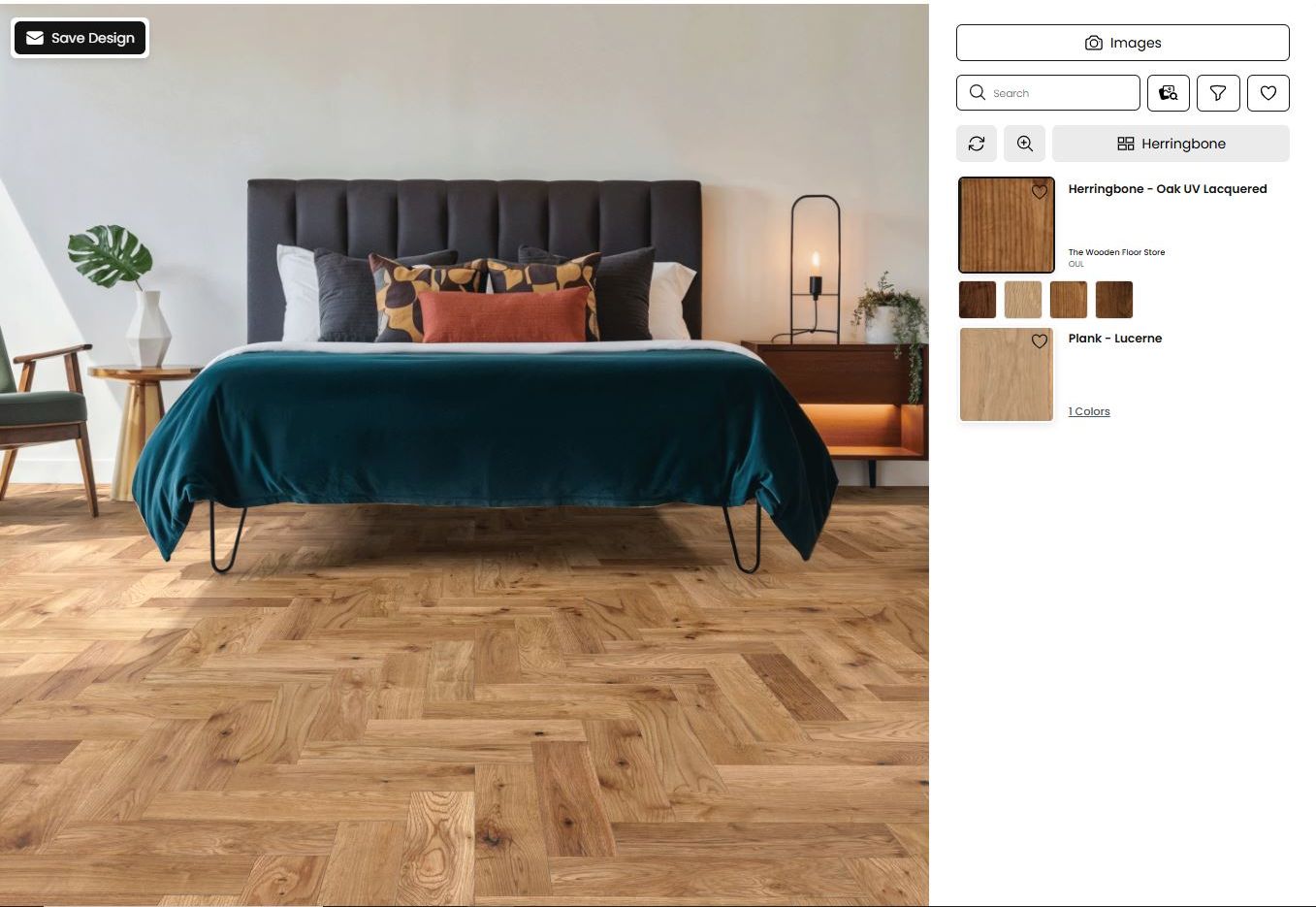
The roomWIZ visualiser allows customers to see flooring products in realistic room settings. Because it uses accurate product textures, the visualiser becomes a reliable sales tool rather than a rough approximation.
Customers can explore products with more confidence, and retailers can give them a clearer view of how each floor may look in a real space.
3. Content Studio
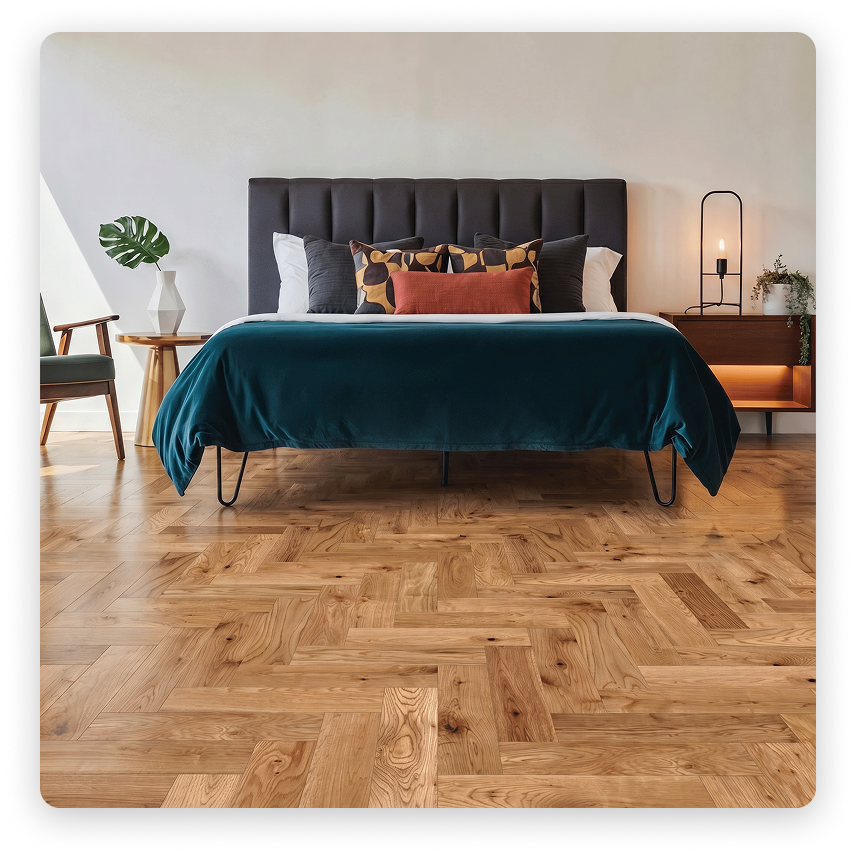
roomWIZ Content Studio uses the same accurate floor textures from the visualiser to create high-quality marketing images quickly and consistently.
This means flooring brands can generate room scenes and lifestyle content without relying on expensive photoshoots, poor CGI or inaccurate AI-generated floors.
The key difference is control. The room image can be generated quickly, but the flooring itself remains accurate in colour, scale and laying pattern.
Better Images Create Better Buying Confidence
In flooring, visual accuracy matters. Customers are not just buying a colour. They are buying a material, a texture, a scale, a pattern and a finish. If the digital content does not communicate those things properly, the buying experience suffers.
For retailers, better imagery can improve product pages, increase customer confidence and reduce uncertainty.
For manufacturers, consistent product imagery can strengthen the brand, support retail partners and make large catalogues easier to market.
For both, the goal is the same: create flooring images that look good, scale efficiently and accurately represent the product.
roomWIZ helps flooring businesses move away from inconsistent, low-quality or inaccurate imagery and towards a more reliable visual content system.
With accurate texture scanning, a realistic visualiser and scalable content creation tools, flooring brands can finally create the quality and consistency their products deserve.
🚀Ready to get started?
Discover how our flooring visualisation platform can help you launch faster, showcase your products more effectively and give customers a better way to explore your catalogue.
Get in touch and we’ll walk you through it.